‘Threat to religious freedom’: Sikh leader condemns disruption of nagar kirtan in New Zealand; urges EAM to intervene | India News

'Threat to religious freedom': Sikh leader condemns New Zealand nagar kirtan disruption; urges EAM to intervene
Screenshot of the video shared by @officeofssbadal on X

NEW DELHI: Sikh leader and Shiromani Akali Dal president Sukhbir Singh Badal on Sunday condemned the disruption of a peaceful Sikh Nagar Kirtan procession in South Auckland, New Zealand, and expressed concern over the threat it poses to religious freedom and communal harmony.Sharing a video of the incident on“Such intimidation threatens religious freedom and the spirit of universal brotherhood,” he added.Badal further urged External Affairs Minister S. Jaishankar to intervene and raise the matter with the New Zealand government to “protect the rights of the Indian diaspora”.

The heartbreaking fight of Navjot Singh, of Indian origin, against deportation to a country he does not know

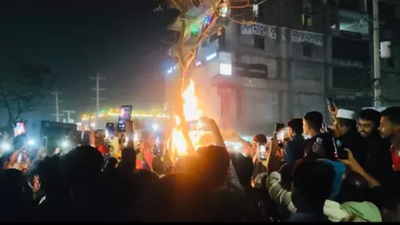
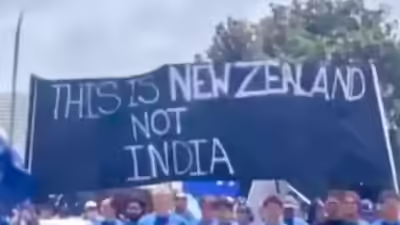
On Saturday, a Sikh religious procession in New Zealand was disrupted by a group of “patriotic” protesters. According to reports in the NZ Herald, the group was linked to political leader Brian Tamaki's Destiny Church, a Christian fundamentalist religious organisation. In a video shared on Tamaki's social media, members of a group calling themselves the True Patriots of New Zealand were seen confronting the Sikh procession as it moved down the street. The group described themselves as “Guardians of the Kiwi lifestyle. Defenders of faith, flag and family” and said they oppose “globalism, mass immigration and woke ideology”.Also read | Christian haka group confronts Sikh parade in Auckland – videoProtesters displayed a large banner that read: “This is New Zealand, not India.” As police kept them separated from the Sikh group, they linked arms, performed a haka and chanted “One True God,” “Jesus,” and “God of the Nation.”Inspector Matt Hoyes said around 50 protesters blocked the road in an attempt to disrupt the parade. He said: “Police acted quickly to ensure the parade could continue safely and additional officers were called in to escort parade participants for the remainder of their route.”

Leave a Comment

It’s wrong to conclude that the mining is permitted in all landforms below 100 metres height, no relaxation made at all in the Aravali: Yadav | India News

It is wrong to conclude that mining is allowed in all landforms below 100 meters height, no relaxation made in Aravali: Yadav

NEW DELHI: Amid concerns expressed in certain quarters over the possibility of expansion of mining activities in the Aravali hills and ranges in the wake of its new uniform definition, Union Environment Minister Bhupender Yadav on Sunday said it was absolutely wrong to conclude that mining is permitted in all landforms below 100 meters in height as no relaxation has been made in Aravali.“Only 0.19% of the total 1.44 lakh sq km area of ​​Aravali can be eligible for mining. The rest of Aravali is protected and safe,” he posted on X. The Aravalli hills and ranges are among the oldest geological formations in India and extend from Delhi to Haryana, Rajasthan and Gujarat. Only a very small area is subject to permitted mining leases and of this small percentage, almost 90% of mining activity is confined to Rajasthan, followed by around 9% in Gujarat and around 1% in Haryana. No mining activity is allowed in Delhi. Yaav said that the Aravali range has been explained as all landforms that exist within 500 meters of two adjoining hills with a height of 100 meters or more. All geographical features that exist within this 500 meter zone, regardless of their height and slope, are excluded for the purposes of granting the mining lease, the minister said.He also clarified the issue in detail in response to a media question on the sidelines of the meeting of the National Tiger Conservation Authority in Sundarbans, a UNESCO World Heritage site. The question pertained to the Supreme Court's recent acceptance of a uniform policy-level definition of Aravali Hills and Ranges specifically in the context of mining regulation.Yadav, however, emphasized that all landforms enclosed within the lower binding contour surrounding hills of 100 meters height or more, irrespective of their height and slopes, are excluded for the purpose of grant of mining lease.Opposition parties raised the issue in Parliament during the concluded winter session, claiming that the definition would exclude most of the Aravali area from protection. In the wake of the SC's November order accepting the Centre-backed definition, Congress general secretary and former environment minister Jairam Ramesh termed the move as a major blow to the Aravali ecosystem.“The Aravalli Hills stretch from Delhi through Haryana and Rajasthan to Gujarat. Over the years they have been devastated by mining, construction and other activities in violation of all regulations and laws. Now it seems that this sensitive and expanding ecosystem will suffer another serious blow,” Ramesh had posted in X.Referring to media reports, he had said, “This definition purports to restrict mining, but in reality it will mean that 90% of the Aravalli hills will no longer be counted as Aravalli. Evidently, the Supreme Court has accepted this revised definition. This is strange and will have very serious consequences for the environment and public health. “It requires an immediate review.”Former Rajasthan chief minister Ashok Gehlot also opened a front against the SC's recent move, blaming the Center for promoting such uniform definition. Yadav, however, on Sunday appealed to everyone to “stop sowing confusion” and even explained how the Rajasthan government has been following the definition since 2006.His ministry also explained that all Aravali range states/UTs during the deliberations agreed to adopt the uniform criterion of “100 meters above local relief” to regulate mining in the Aravalli region as had been in force in Rajasthan, while unanimously agreeing to make it more objective and transparent.“All landforms enclosed within the lowest binding contour surrounding hills of 100 meters height or more, irrespective of their height and slopes, are excluded for the purpose of grant of mining lease. Similarly, the Aravali range has been explained as all landforms existing within 500 meters of two adjoining hills of 100 meters height or more. All landforms existing within this 500 meter zone meters, regardless of their height and slopes, are excluded for the purposes of the mining lease concession,” the ministry clarified.By defining Aravalli Hills as any landform rising 100 meters or more above the local relief, along with its supporting slopes, the entire ecological unit is protected. “This prevents the gradual exploitation of slopes or foothills that are vital for soil stability, water recharge and vegetation cover.”

Leave a Comment

Maharashtra local body polls: Record victory for BJP-led Mahayuti; opposition blames EC, EVMs & money | India News

Maharashtra local body polls: Record win for BJP-led Mahayuti; Opposition blames EC, EVMs and money

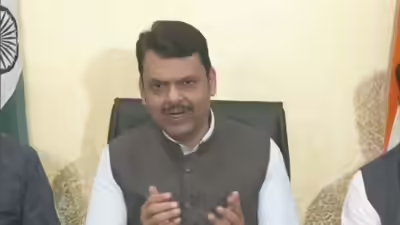
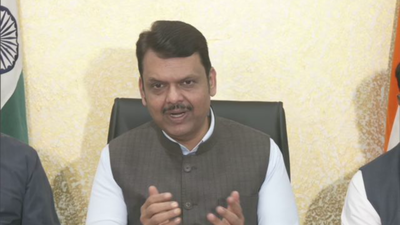
NEW DELHI: The BJP-led Mahayuti alliance on Sunday registered a decisive victory in the local body elections in Maharashtra, with the party claiming 48 per cent of councilor seats and winning 129 municipal council presidencies.The counting of votes for 286 municipal councils and nagar panchayats, carried out in two phases, showed the BJP emerging as the largest party. “48 per cent of the councilors have been elected on the BJP symbol, which is a record. The BJP has created another record with 3,300 councilors elected from the party. BJP candidates have been elected presidents in 129 municipal councils. In 75 per cent of the local bodies, Mahayuti candidates have been elected municipal presidents,” Fadnavis said.He attributed the success to the party's organization and the government's development agenda, saying, “It is the team effort – the organization and the government. We fought the polls on the development agenda. I ran a positive campaign on the development agenda. I never criticized any political leader or party. I sought votes on the development agenda, the work done by the government so far and our plan for the future.” Mahayuti's allies, including the BJP, Eknath Shinde-led Shiv Sena and Ajit Pawar's NCP, clashed with each other in some areas. While the opposition parties, mainly Congress and Shiv Sena (UBT), conceded defeat and leveled allegations. There were also alliances and “friendly fights” among the Maha Vikas Aghadi (MVA) voters. .State Congress president Harshwardhan Sapkal congratulated the winning candidates but added, in a comment, that the state election commission “helped” the ruling alliance. Shiv Sena (UBT) leaders accused the Mahayutis of using “money and muscle power” and alleged manipulation of EVMs, PTI reported. Shiv Sena (UBT) MP Sanjay Raut said Mahayuti's victory was due to “manipulation” of the EVMs. He added that the opposition could not withstand a “hailstorm” of money.His party colleague Ambadas Danve alleged that “money and muscle power” shaped Mahayuti's victory. “The Mahayuti has won a larger number of seats compared to the Maha Vikas Aghadi voters, thanks to the muscular and monetary power deployed by the ruling parties,” Danve told PTI in Chhatrapati Sambhajinagar. BJP state president Ravindra Chavan described the results as a “decisive mandate”, stating that Mahayuti had won more than 250 councils, nagar parishads and nagar panchayats, and that BJP candidates won 134 council chief posts and more than 3,000 councilor seats. “The opposition made all kinds of accusations during the campaign, but people took notice. Uddhav Thackeray himself said that he had nothing to offer the people and that is why his party was rejected. His party could not even get council president posts in double digits,” Chavan said.He went on to say, “Now, Mumbaikars would also reject the opposition's narrative in the upcoming BMC polls.” Union minister Nitin Gadkari called it an “overwhelming success” and “a victory for our workers”.While the Mahayuti largely dominated the elections, the Congress and NCP maintained control in some areas, including Chandrapur, Sangli and Loha, with victories in Palghar for the Shiv Sena and in Nanded for the Marathwada Janhit Party. The recount was ordered in the Kamptee municipal council after a narrow victory of the BJP by 116 votes, officials said.(With contributions from agencies)

Leave a Comment

Gold and Silver outlook: Holiday-thinned trade may trigger price dip; analysts warn of volatile week

Perspectivas del oro y la plata: el comercio reducido por las fiestas puede provocar una caída de precios; Los analistas advierten sobre una semana volátil.Trading volumes are likely to decline during Christmas week, with many traders taking an extended weekend starting Wednesday. However, Pranav Mer of JM Financial Services warned that despite lower participation, market volatility could increase. “Going into Christmas week, traders are expecting some consolidation/correction in the markets as volumes are expected to remain low and major traders will stay away due to the long weekend starting late Wednesday. However, price volatility/swing may be higher due to low participation,” he said, as quoted by PTI.Gold has shown a notable rally recently. MCX gold futures rose by Rs 574 (0.43%) last week, hitting an all-time high of Rs 1,35,590 per 10 grams on Thursday. This marked the fourth consecutive weekly gain and puts gold on track for its 12th consecutive monthly gain.“Dollar weakness, dovish stance from the Federal Reserve and lower US inflation data triggered the momentum in gold prices in the last week,” said Prathamesh Mallya of Angel One. Although gold has seen a significant rise, silver has been the star, eclipsing the yellow metal with an 8.08% increase last week. It hit a record high of Rs 2,08,603 per kilogram on Friday. The white metal has risen more than 130% this year, driven by strong ETF flows and concerns about yen carry trades following the Bank of Japan's expected rate hike.Looking ahead, experts remain positive on both metals, but warn against immediate price corrections. Pranav Mer predicted that silver could fetch between Rs 2,25,000 and Rs 2,45,000 per kilogram. “Silver remains positive but risk reward remains unfavourable. In the short term, prices may reach between Rs 2,25,000-2,45,000 per kilogram. On the technical front… we continue to maintain a positive view on gold and expect prices to continue rising towards Rs 1,40,000-1,45,000 per kilogram by early next year, with reversal support situated at Rs 1,29,000 per 10 grams,” he said.This bullish trend in precious metals is not just a normal market cycle. According to Pankaj Singh of SmartWealth.AI, similar price patterns have only occurred twice in the last fifty years, during periods of significant monetary and geopolitical tensions.(Disclaimer: Recommendations and opinions on asset classes provided by experts are their own. These opinions do not represent the views of The Times of India)

Leave a Comment

‘Announcement in two-three days’: Sanjay Raut on Sena (UBT)-MNS alliance; no ‘bad blood’ with Congress | India News

'Announcement in two or three days': Sanjay Raut on Sena (UBT)-MNS alliance; There is no 'resentment' with Congress.

NEW DELHI: Leaders of Shiv Sena (UBT) and Maharashtra Navnirman Sena (MNS) met on Sunday for alliance talks for the upcoming municipal corporation elections, with Sena (UBT) MP Sanjay Raut later saying the alliance could be officially announced in “two to three days.”Read also | 'Sena (UBT) and MNS to join forces': Sanjay Raut on Maharashtra civic polls; A merger is likely to happen in Mumbai and other major cities.“We believe these talks are the last meeting. In two to three days there will be an official announcement,” Raut told reporters in Mumbai.The move would unite estranged cousins ​​Uddhav and Raj Thackeray, who lead Sena (UBT) and MNS respectively.The talks coincided with the counting of votes in the Maharashtra local body elections, and early trends pointed to a victory for the ruling Mahayuti.Read also | BMC polls: BJP and Shiv Sena reach consensus on 150 constituencies in Mumbai; final list before December 22Meanwhile, Raut pointed out that efforts were being made to bring the Congress, an ally of the Sena (UBT), into the Brihanmumbai Municipal Corporation (BMC) elections, despite their “reservations” about Raj Thackeray.“The Congress has expressed reservations about Raj Thackeray. We are trying to convince the Congress that to defeat the BJP, it is necessary to unite. However, efforts are being made to convince them,” the Rajya Sabha member said.Read also | BMC polls: Congress decides to go alone; Uddhav-Raj bonhomie MVA strainsHe added that there would be “no bad blood” between the two parties even if they did not form an alliance in Mumbai. The BMC, the civic body of the financial capital, is the richest municipal corporation in the country.Elections to 29 municipal corporations, including the BMC, will be held on January 15, with counting of votes scheduled for the next day.On Saturday, All India Congress Committee general secretary and Maharashtra in-charge Ramesh Chennithala said there was a “strong demand” from party workers to contest the BMC elections independently.“We will fight at the polls on issues common to Mumbaikars like pollution, healthcare and corruption. Mumbaikars should give us a chance to serve them well. Congress is adamant on contesting elections independently to protect the secular fabric of the metropolis,” Chennithala said.(With PTI inputs)

Leave a Comment

GeM facilitates Rs 2,200 crore asset disposal for govt entities in 4 years

GeM facilitates disposal of assets worth Rs 2,200 crore for government entities in 4 years

NEW DELHI: Public procurement portal GeM has enabled government departments and entities to raise Rs 2,200 crore in the last four years by disposing of assets such as scrap, e-waste, old vehicles, machinery and leased properties, an official release said on Sunday. The Government e-Marketplace (GeM) operates as a digital platform through which ministries, departments and public sector entities purchase goods and services. In addition to this feature, GeM facilitates the disposal of government assets through its “Term Auction” module, introducing competitive online bidding and improving transparency, efficiency and value discovery in a process that was traditionally fragmented and paper-intensive. “Between December 2021 and November 2025, GeM's Forward Auction module facilitated auctions worth over Rs 2.2 billion, conducted over 13,000 auctions, onboarded over 23,000 registered bidders and enabled over 17,000 auctioneers to participate,” the commerce ministry said. These figures underline that forward auctions are no longer a pilot initiative but have evolved into a nationwide digital mechanism for the disposal of government assets, he said. A forward auction is a digital bidding process through which government departments sell assets such as scrap metal, e-waste, old vehicles, machinery and leased properties, including buildings and land, to the highest bidder. In this process, the government lists an item on the platform, registered bidders place competitive bids, and the highest bid is declared successful. Through GeM's secure digital interface, departments can set reserve prices, define participation conditions and monitor bids in real time, ensuring efficiency and transparency throughout the auction lifecycle. Citing an example, he said the State Bank of India auctioned 100 EWS (Economic Weak Sections) flats in Lucknow and got Rs 34.53 crore through the GeM platform. The other auctions through this module include sale of unusable and obsolete items by the National Zoological Park here, and leaked gypsum worth Rs 3.35 crore by FCI Aravali Gypsum and Minerals India.

Leave a Comment

‘Second killing of Gandhi’: Chidambaram hits out at Centre over VB-G RAM G bill, calls it a ‘fraud’ | India News

'Second assassination of Gandhi': Chidambaram attacks Center over VB-G RAM G bill, calls it 'fraud'

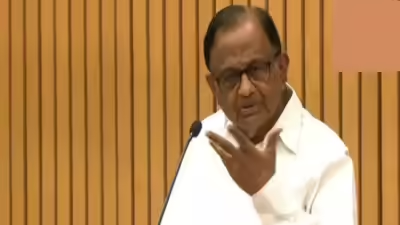
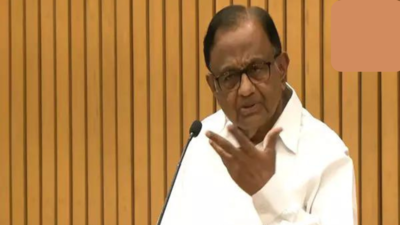
NEW DELHI: Congress MP P Chidambaram on Sunday launched a strong attack on the Centre's decision to replace MGNREGA, calling for the removal of mahatma gandhiThe name comes from the “second assassination of Mahatma Gandhi” plot.Addressing a press conference in Chennai, Chidambaram said the Congress would continue to oppose the new law until the previous employment guarantee framework is restored, PTI reported. “The party will expose this fraud by going house to house, town to town, and our fight will continue until this law is repealed,” he said. On December 18, Parliament passed the Viksit Bharat Guarantee for Rozgar and Ajeevika Mission (Gramin) (VB-G RAM G Bill), which seeks to replace the 20-year-old MGNREGA and promises 125 days of rural wage employment a year.Reacting to the change, the former Union Finance Minister said, “According to me, it is the second assassination of Mahatma Gandhi. He was murdered once on January 30, 1948. They have killed him again, they have killed his memory again.” He added: “You can try to erase Gandhi and Nehru from official records, but they live in the deep consciousness of the Indian people, like Buddha or Jesus. No government order can erase them.”The senior Congress leader argued that the new legislation reverses the nature of the employment guarantee by converting a legal right into a discretionary scheme. “Under the original law, if a person asked for a job, the government was legally obligated to provide it. Now, people can only ask for a job if the government first offers it to them,” he said.He also questioned the name of the new show, referring to the use of “Hindi words written in English letters”, and said titles like “Viksit Bharat G Ram G” would be confusing for rural populations in southern states. “Even ministers may not understand what these names mean. The law now says that unless states use this exact name, they will not receive funds,” he said. The Congress leader further claimed that the coverage of the scheme would be reduced, saying it would now apply only to the “notified districts” chosen by the Centre, unlike the nationwide reach of MGNREGA. He also alleged that responsibility for funds was being shifted to states, warning that implementation would suffer if states lacked resources. “Four years ago, the allocation was Rs 1,11,000 crore. During the last three years, Rs 86,000 crore. Next year, it will be only Rs 65,000 crore. Any cost above Rs 65,000 crore is the responsibility of the state government,” he said. Chidambaram said the reduction would hurt the “ultra-poor,” particularly women and daily wage workers. “The scheme is a safety net for 12 million people who depend on daily wages. In Tamil Nadu, 90 to 95 per cent of workers are women; they will suffer the most,” he added.He also dismissed the Centre's claim of increasing working hours to 125 as “unrealistic”, pointing out that the national average currently stands at 50 days. Recalling that MGNREGA was passed unanimously in 2005, he said Prime Minister Narendra Modi had once described it as a “living monument” of the UPA's failures. “Now the same government is dismantling it,” he added.

Leave a Comment

BJP won 2-0 in 2025 elections, can opposition bounce back in 2026? | India News

El BJP ganó 2-0 en las elecciones de 2025, ¿podrá la oposición recuperarse en 2026?
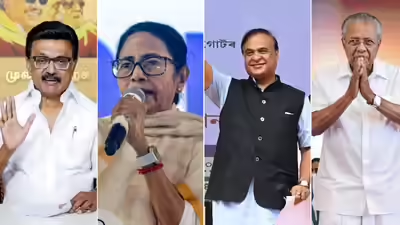
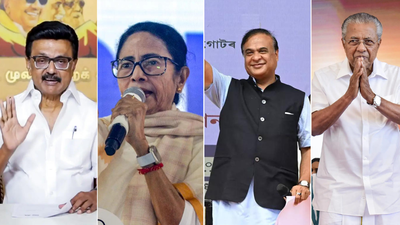
MK Stalin, Mamata Banerjee, Himanta Biswa Sarma y Pinarayi Vijayan (Fotos de archivo)

NUEVA DELHI: La NDA gobernante, liderada por el BJP, tuvo mucho que celebrar en 2025 con victorias decisivas en Delhi y Bihar, los dos estados donde se celebraron elecciones a la asamblea este año. Para la oposición, 2025 fue un año de decepciones. Mientras que la AAP dirigida por Arvind Kejriwal fue derrotada en Delhi, el Mahagathbandhan del Congreso, el RJD de Lalu Prasad y la izquierda fueron diezmados en Bihar. Pero 2026 podría ser una oportunidad para que la oposición se recupere, ya que cuatro estados y un Territorio de la Unión (Bengala Occidental, Kerala, Tamil Nadu, Assam y Puducherry) votarán para elegir sus nuevas asambleas. Excepto Assam, gobernado por el BJP, la oposición tiene una presencia dominante en los otros tres estados.

'Sólo hay un Modi': Jaishankar dice que los líderes definen a las naciones, no a los ministros ni a los individuos

Con elecciones previstas para marzo y mayo de 2026, los partidos ya han comenzado a calibrar estrategias y afinar su discurso ante los votantes.
-

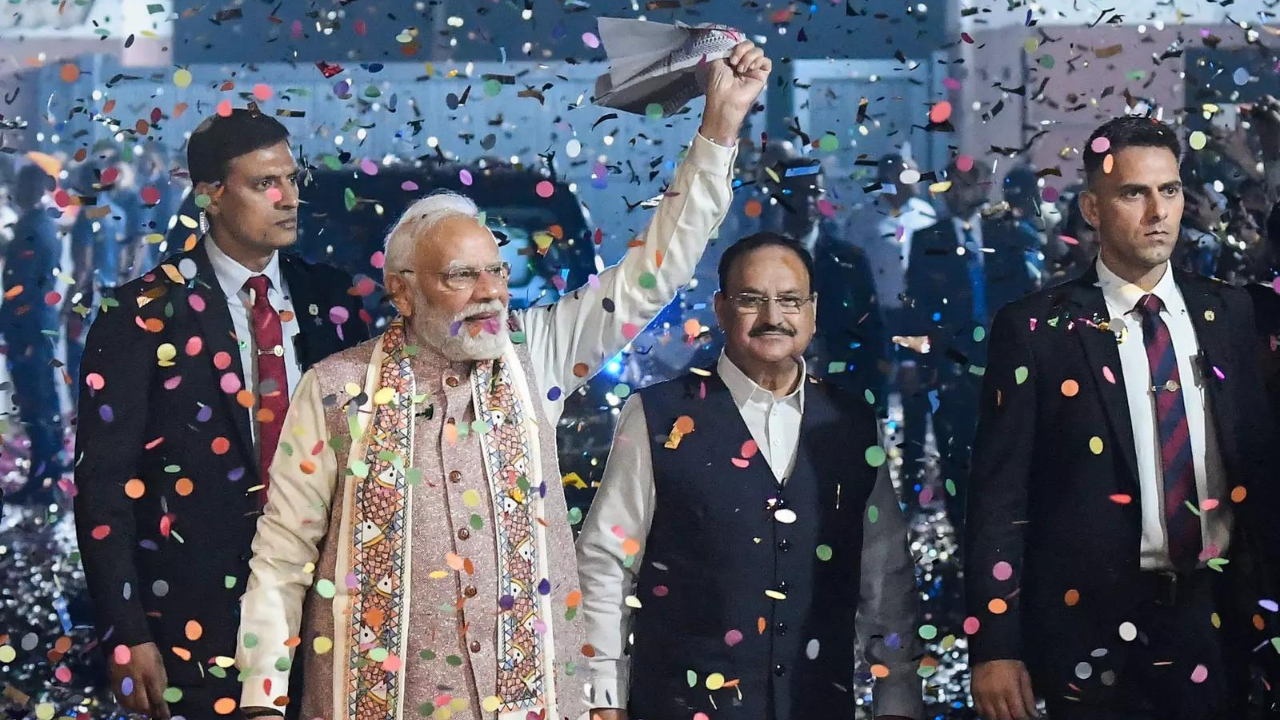
El primer ministro Modi tras la victoria en Bihar

En Bengala Occidental, el Congreso Trinamool de Mamata Banerjee defenderá su fortaleza mientras intenta contener un renovado impulso del BJP, mientras que el Congreso y la izquierda harán otro esfuerzo para recuperar el terreno político perdido.En Kerala, el LDF, liderado por el CPM, aspira a un tercer mandato consecutivo sin precedentes, una hazaña inaudita en la tradicional política pendular del estado.Tamil Nadu se está preparando para otra ronda del duelo dravidiano, con el DMK y el AIADMK una vez más anclando el campo de batalla político del estado.En Assam, la NDA liderada por el BJP bajo el mando de Himanta Biswa Sarma luchará por controlar el estado incluso cuando el Congreso busca organizar una reactivación.Mientras tanto, en Puducherry, la coalición AINRC-BJP de N Rangasamy enfrenta el desafío de mantener unida una alianza frágil contra un DMK que busca ampliar su huella y un Congreso debilitado que intenta regresar.Una corriente subyacente clave en estas contiendas es la Revisión Intensiva Especial (SIR, por sus siglas en inglés) de los padrones electorales, extendida a varios estados con destino a las urnas, incluidos Bengala Occidental, Tamil Nadu y Puducherry. Por lo tanto, las elecciones de 2026 se desarrollarán en listas de votantes actualizadas, un factor que podría cambiar muchas cosas.

Bengala Occidental

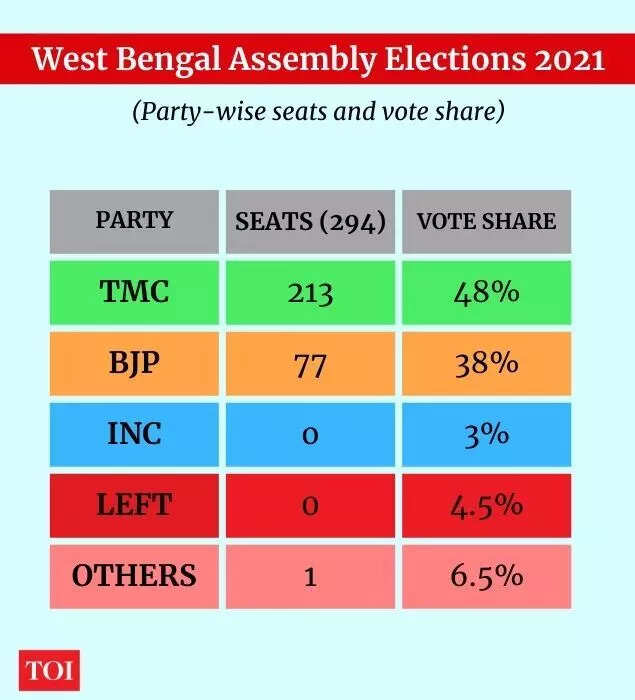
Animado por su amplia victoria en las recientes elecciones a la asamblea de Bihar, el BJP ha dejado claras sus ambiciones: Bengala es el próximo campo de batalla del partido azafrán.De cara a las elecciones de 2026, el BJP está presionando con todas sus fuerzas para convertir el impulso en escaños. Mientras tanto, el TMC, que ganó 213 de los 294 escaños de la asamblea en 2021 con aproximadamente el 48% de los votos, ha vuelto a estar en plena campaña, defendiendo una fortaleza que ha mantenido durante más de una década. Mientras el Partido del Congreso lucha por recuperar su equilibrio, el escenario está preparado para un enfrentamiento político de alto riesgo.

-

¿Qué está en juego?

La creciente influencia del BJP

De una presencia modesta en 2016 con solo 3 escaños, el BJP aumentó a 77 escaños y aproximadamente el 38% de los votos en 2021. Las elecciones de 2026 pondrán a prueba si se trató de un aumento temporal o del comienzo de un desafío sostenido al dominio del TMC en Bengala.

El desafío de la titularidad de TMC

Con más de 213 escaños y un 48% de votos en 2021, Mamata Banerjee entra en 2026 como la titular con la ventaja más amplia. Ya ha comenzado la movilización y la divulgación, pero el verdadero desafío es mantener este techo alto frente a los anti-gobernantes y a un BJP más agresivo que antes.

El Congreso lucha por la relevancia

De ser una fuerza dominante antes de 2011 a estar casi aniquilado en 2021, el Congreso ahora está luchando por visibilidad. La destitución de Adhir Ranjan Chowdhury y el nombramiento de Subhankar Sarkar aún no se han traducido en un fuerte mensaje político ni en un reposicionamiento de la campaña, lo que deja al Congreso todavía buscando equilibrio.

¿Bloque INDIA?

Con el futuro incierto del bloque de oposición INDIA y Mamata Banerjee insinuando repetidamente que TMC competirá solo en Bengala, el Congreso corre el riesgo de quedar atrapado entre dos compulsiones: alinearse a nivel nacional versus confrontar a TMC a nivel local.“Bengala es nuestra, aquí lucharemos solos”, declaró la ministra principal de Bengala Occidental, Mamata Banerjee.

factor SIR

Además, las elecciones de 2026 se llevarán a cabo bajo una Revisión Intensiva Especial de los padrones electorales. Los cambios en el registro de votantes, particularmente en distritos electorales urbanos o con una gran cantidad de minorías, podrían afectar significativamente los márgenes en los escaños clave.

Tamil Nadu

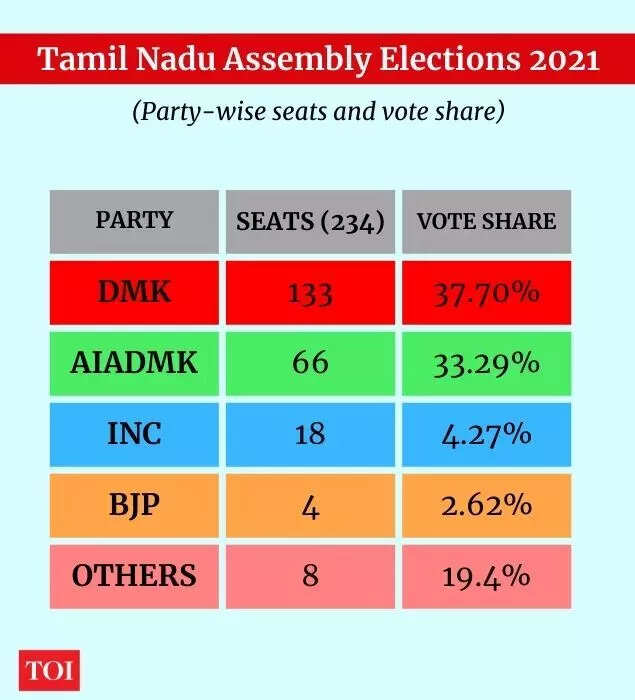
Tamil Nadu se está preparando no sólo para otro enfrentamiento entre Dravida Munnetra Kazhagam (DMK) y All India Anna Dravida Munnetra Kazhagam (AIADMK), sino también para una tercera fuerza que podría cambiar el juego.La entrada de TVK bajo Vijay ha hecho que las elecciones a la asamblea de Tamil Nadu en el estado sean aún más interesantes.
-

Elecciones a la asamblea de Tamil Nadu 2021

¿Qué está en juego?

Prueba de titularidad de DMK

El gobernante DMK llega a 2026 desde una posición de fuerza, habiendo conseguido 133 escaños por sí solo en las anteriores elecciones a la asamblea. Sin embargo, esta vez el partido se enfrenta a un panorama político más complicado, con la alianza AIADMK-BJP reagrupada y mejor alineada que en 2021. El primer ministro de Tamil Nadu, Stalin, ya ha anunciado que el partido participará en las elecciones estatales como parte del bloque INDIA, calificándolo de asociación ideológica construida sobre objetivos compartidos.La verdadera prueba, sin embargo, radica en si DMK puede superar las presiones contra el gobierno, defender su historial de bienestar y gobernanza y gestionar las expectativas de los votantes en cuestiones como el empleo, la exención de los ninis y las tarifas eléctricas.

Alianza AIADMK-BJP

Las elecciones a la Asamblea de Tamil Nadu de 2026 son una batalla de alto riesgo para All India Anna Dravida Munnetra Kazhagam (AIADMK), que busca desesperadamente una remontada tras dos derrotas electorales consecutivas. La gran pregunta para 2026 es si la renovada asociación AIADMK-BJP puede traducirse en escaños. En 2021, el frente liderado por el AIADMK obtuvo 75 escaños, mientras que el BJP siguió siendo una fuerza secundaria. Sin embargo, juntos siguen siendo el mayor bloque rival del gobernante DMK. Edappadi K. Palaniswami ya ha marcado la pauta, prometiendo que el frente “destrozará el sueño de Stalin de ganar 200 escaños” y prediciendo que la alianza podría superar los 210.Un factor clave que complica la aritmética de la oposición es la entrada del actor Vijay en su partido, el Tamilaga Vettri Kazhagam (TVK), cuya decisión de competir en solitario amenaza con dividir el voto anti-DMK.

factor TVK

Las elecciones de Tamil Nadu de 2026 son el debut electoral crucial para TVK del actor Vijay, quien audazmente ha declarado la contienda como una lucha “TVK versus DMK” y se ha posicionado como la alternativa al “tío de Stalin”. Vijay tiene un gran número de seguidores jóvenes y tiene un potencial factor sorpresa para alterar la tradicional contienda bipolar. Sin embargo, la trágica estampida de Karur que se cobró 41 vidas durante una de sus giras previas a las elecciones arroja una sombra negativa significativa. El incidente ha sido fuertemente aprovechado por la oposición, lo que ha obligado a Vijay y al TVK a defender su competencia y ganarse la confianza del público.

Assam

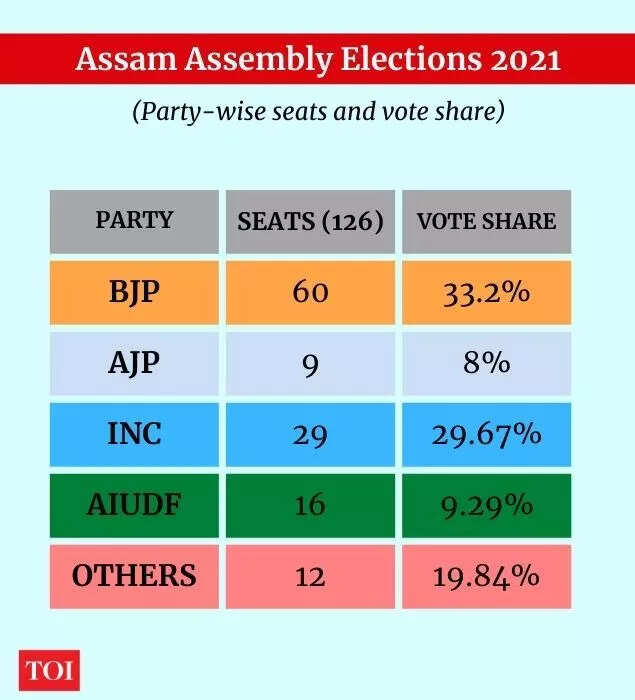
En Assam, la NDA liderada por el BJP bajo el liderazgo del primer ministro Himanta Biswa Sarma. quien se ha convertido en una de las caras regionales más prominentes del partido, luchará por mantener el estado, con el objetivo de asegurar un tercer mandato consecutivo sin precedentes.

-

¿Qué está en juego?

El dominio regional del BJP

A pesar de los 75 escaños obtenidos en 2021, la oposición a la titularidad sigue siendo un importante desafío subyacente. El ministro principal, Sarma, sin embargo, se ha fijado un objetivo agresivo y afirma con confianza que la NDA es capaz de ganar “104 de 126 escaños”.

La prueba de reactivación del Congreso

El Congreso, que obtuvo 50 escaños en 2021, está desesperado por recuperarse, liderado por el recién nombrado jefe de estado, Gaurav Gogoi. El partido está tratando de aprovechar los “10 años de anti-incumbencia” contra el BJP, y Gogoi afirmó: “Después de 10 años de gobierno corrupto y autoritario del BJP, el pueblo de Assam quiere un cambio”. La elección es una prueba personal para Gogoi, quien debe demostrar que puede traducir su victoria en Lok Sabha en un resurgimiento más amplio del partido a nivel asambleario.

El dilema de la AIUDF

La AIUDF de Badruddin Ajmal obtuvo 16 escaños en 2021, con un buen desempeño en los bolsillos de mayoría musulmana. Una ruptura con el Congreso o una contienda en solitario podría dividir el voto de la oposición, beneficiando al BJP en luchas triangulares.

Kerala

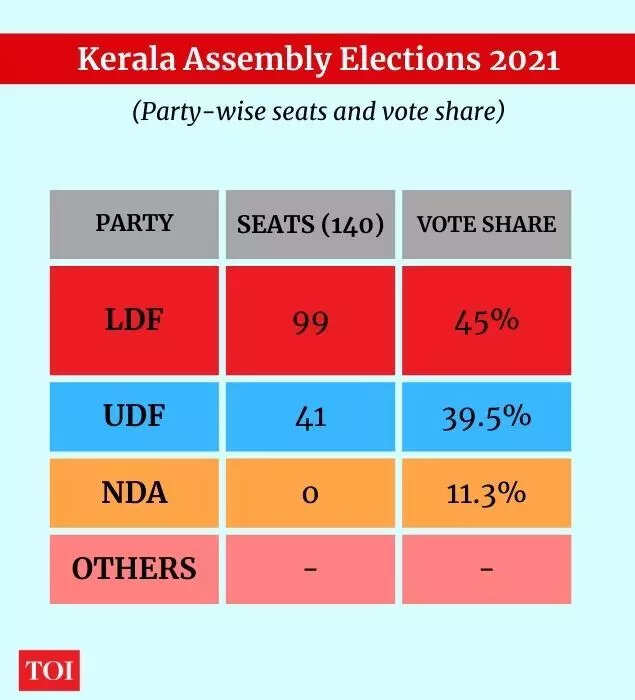
Kerala se dirige a 2026 con uno de los escenarios más raros de su historia electoral: un frente gobernante que intenta ganar un tercer mandato consecutivo. El LDF, liderado por el PCI(M), rompió el patrón de alternancia del estado en 2021, ganando 99 de 140 escaños, mientras que el UDF, liderado por el Congreso, cayó a 41 y el BJP, una vez más, no logró abrir su cuenta.
-

Elecciones a la asamblea de Kerala 2021

¿Qué está en juego?

La candidatura del LDF para el tercer mandato

El LDF nunca ha ganado tres asambleas consecutivas en la historia democrática de Kerala. Para el PCI(M), que lidera el frente, esta elección es crítica ya que Kerala sigue siendo el único estado importante donde la izquierda está actualmente en el poder por sus propias fuerzas. El ministro principal, Pinarayi Vijayan, que volverá a encabezar el frente, está haciendo campaña sobre el tema de “continuidad para el progreso”. Altos dirigentes del PCI(M), como KN Balagopal, han declarado públicamente que “la continuidad era vital para mantener el impulso” de las políticas de desarrollo y bienestar. Sin embargo, el LDF enfrenta un importante desafío contra el gobierno, que la oposición está aprovechando para contrarrestar las afirmaciones de desarrollo del gobierno.

La batalla existencial de la UDF

La UDF cayó de 47 escaños en 2016 a 41 en 2021, y aún conserva una proporción considerable de votos, pero lucha por convertirla. 2026 es la mejor oportunidad para que la coalición recupere terreno si se fortalece la oposición al poder. Un resultado débil podría empujar a la UDF aún más hacia la inercia, reduciendo la huella del Congreso en otro estado del sur.

BJP: ¿todavía al margen?

El BJP ha disputado agresivamente durante dos ciclos, pero no tiene escaños en el MLA en Kerala. Si rompe esa barrera en 2026, incluso con 1 o 3 victorias, cambiará la dinámica de la Cámara. Si vuelve a fracasar, Kerala seguirá siendo uno de los últimos estados importantes fuera de la huella electa del BJP.

Puducherry

En Puducherry, la coalición AINRC-BJP de N Rangasamy enfrenta el desafío de mantener unida una frágil alianza contra un renaciente DMK que busca ampliar su presencia y un Congreso debilitado que intenta regresar.

¿Qué está en juego?

La frágil coalición de la NDA

La NDA gobernante está dirigida por el Congreso Nacional de la India (AINRC) y el BJP. En 2021, el AINRC obtuvo 10 escaños y el BJP obtuvo 6 escaños. Esta coalición está bajo una inmensa presión debido a la discordia interna y la lucha contra el gobierno. La ruptura interna pasó a primer plano con la dimisión de un único ministro dalit, AK Sai J Saravanan Kumar, por decisión del alto mando.La medida provocó fuertes reacciones y expuso fallas más profundas dentro de la coalición y la unidad local del BJP.

El intento de DMK de expandirse

El DMK entró en las elecciones de Puducherry de 2021 con una presencia terrestre limitada, pero aun así obtuvo 6 escaños, superando al Congreso y convirtiéndose en el mayor partido de oposición. Para 2026, el principal desafío para DMK sería ampliar su presencia en el territorio de la Unión y convertir su influencia en números.

Congreso: supervivencia, no dominio

Como en muchos otros estados, el Congreso también lucha por la supervivencia en Puducherry. El que alguna vez fue el partido gobernante aquí, ha quedado marginado desde las elecciones de 2021. Para el Congreso, 2026 no se trata de ganar poder; se trata de prevenir la irrelevancia. Un recuento de 5 a 6 escaños lo mantiene vivo; cualquier cosa por debajo de eso acelera el declive. El gran viejo partido debe sobrevivir antes de poder competir.El SIR de los censos electorales de la Comisión Electoral ya ha elevado el tono en estos estados, con el BJP respaldando firmemente el ejercicio mientras la oposición acusa al organismo electoral de ayudar al partido azafrán a obtener una ventaja sobre sus oponentes políticos. Está claro que el año 2026 está preparado para interesantes contiendas electorales.
Leave a Comment

‘There is radicalisation’: BJP minority morcha chief slams lynching of Hindu youth in Bangladesh; attacks Mamata Banerjee | India News

'There is radicalization': BJP minority morcha leader criticizes lynching of Hindu youth in Bangladesh; attacks Mamata Banerjee

NEW DELHI: BJP's minority Morcha national president Jamal Siddiqui on Sunday condemned the lynching of a Hindu youth in Bangladesh, alleging growing radicalization in the country. He also stated that under Mamata Banerjee's leadership, West Bengal could follow a similar path.Dipu Chandra Das was killed in a mob lynching in Mymensingh district on December 18 over accusations of blasphemy. His body was later set on fire. The incident occurred amid violent anti-India protests following the assassination of Sharif Osman Hadi, leader of the July uprising that led to the overthrow of Sheikh Hasina's government.Reacting to the incident, Siddiqui said the murder “brings shame to the world and discredits Islam.”“There is no real Islam in Bangladesh because where there is radicalization, there is no Islam. Radicalization is not part of Islam,” he added, quoted by ANI.Siddiqui alleged that radical elements now dominate Bangladesh and said attacks on minorities, especially Hindus, were increasing. He also drew parallels with Pakistan.“The atrocities being committed against our Hindu brothers are condemned by all of us, Indian Muslims and members of the Bharatiya Janata Party. If necessary, we will actively support our Hindu brothers and fight alongside them in Bangladesh. Our Prime Minister Narendra Modi is keeping a close eye on this. If necessary, India will not hesitate to teach a lesson to Bangladesh,” he said.Questioning the response of Bangladesh authorities, Siddiqui said the measures taken so far lacked seriousness.“The arrests made in Bangladesh are just a spectacle. Given how radicalization has taken over Bangladesh, I appeal through you to the secular people there, those who believe in humanity and those who care about Islam, to support our Hindu brothers and come forward to ensure justice and safety for them. Just as Muslims are a minority in India, but our Hindu brothers protect us and provide us with security and equal status, this is the culture of our country, and Bangladesh has adopted this culture,” he said.He further said, “But it is very sad that Bangladesh is becoming like Syria and other radical countries. The people in the government there are radicalized, they are people who spread terror, and India will support the liberation of Bangladesh from those people.”Siddiqui also attacked West Bengal Chief Minister Mamata Banerjee, accusing her of encouraging radicalization for political gains.“West Bengal under the leadership of Mamata Banerjee is following the path of Bangladesh, and if this continues, West Bengal will also not be safe, and Mamata Banerjee is no less than a radicalist or an ISIS leader. Her ideology is a radical ideology, and she promotes radicalization so that she can use it as a vote bank. We will not allow West Bengal to become like Bangladesh. In the 2026 elections, the people of India and Bengal will liberate Bengal from Mamata Didi,” he said.

Leave a Comment

‘Not ready for responsibility’: RSS chief Mohan Bhagwat on live-in relationships and how many children to have — watch | India News

'I am not ready for responsibility': RSS chief Mohan Bhagwat on live-in relationships and how many children to have - watch
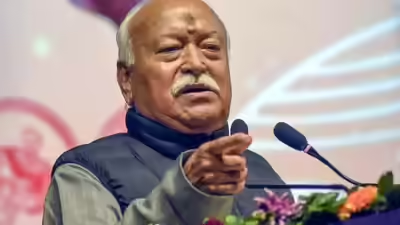
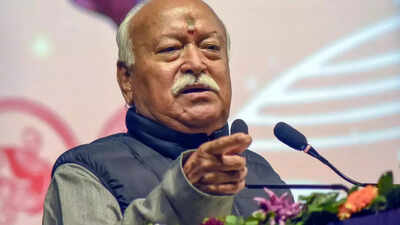
RSS chief Mohan Bhagwat in Kolkata on Sunday (ANI photo)

NEW DELHI: RSS chief Mohan Bhagwat on Sunday shared his views on live-in relationships while addressing a meeting in Kolkata. Speaking during the centenary celebrations of the Rashtriya Swayamsevak Sangh, Bhagwat said live-in relationships reflected an unwillingness to take responsibility. “You are not ready to take responsibility. “This is not right,” he told the audience.According to Bhagwat, those who do not wish to marry should choose a life of renunciation. “If you don't want to get married, that's fine. We can become sanyasis. But if you don't even do that and also don't take responsibility, how will things work?” asked.Three children help manage the egoBhagwat also talked about how many children a couple should have. “The question of how many children a couple should have is a matter for the family, the couple and society. A formula cannot be given,” he said.However, Bhagwat said he had spoken to doctors, psychologists and demographers, who said that marrying early between the ages of 19 and 25 and having three children was beneficial for health.“I have gained some knowledge from talking to doctors, etc., and they tell me that if marriage occurs early, between the ages of 19 and 25, and there are three children, then the health of the parents and children remains good,” Bhagwat said. He added that, according to psychologists, having three children also helps manage the ego. “Psychologists say that having three children helps people learn to control their ego,” Bhagwat said.The RSS chief, however, also acknowledged that he was only sharing information he had received from others. “I am a preacher, single. I don't know anything about this matter,” Bhagwat said.

Leave a Comment